Tracing Box: A Creative Font for Learning and Design
A Font with a Built-In Learning Framework
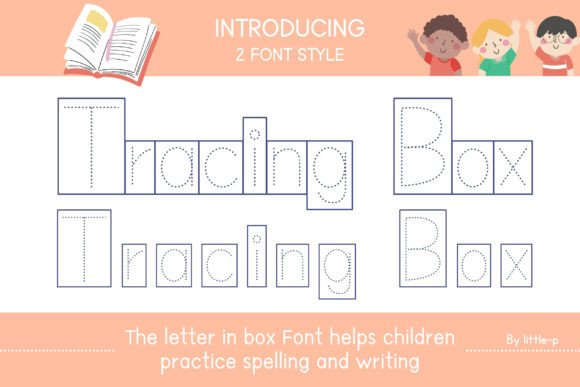
When you first encounter the Tracing Box typeface, its purpose is immediately clear. This isn't just another display font or a script font with a playful vibe. It's a purpose-built design asset engineered for a specific, impactful task: helping young learners master word spellings. The concept is brilliantly simple. Each letter is housed within its own distinct square or box, creating a visual scaffold. This grid-like structure does more than look neat; it provides a clear, contained space for a child to focus on the form of each individual character, turning the abstract task of spelling into a tangible, spatial exercise. The personality of Tracing Box is friendly, clear, and instructional without feeling cold or overly technical. It strikes a balance that feels both modern and approachable, making it a genuinely useful tool for educators and a surprisingly versatile asset for creative professionals.
Visual Character and Design Nuances
The Tracing Box font set includes two distinct styles: Tracing Box Regular and Tracing Box Space. The Regular style presents letters neatly centered within their bounding boxes, offering a clean, direct look. The Space style introduces intentional whitespace between the boxes, which can dramatically improve readability for longer words or when used in larger text blocks, preventing a dense, overwhelming appearance. Visually, the letterforms are straightforward sans-serifs, prioritizing legibility above all else. The lines are consistent, the curves are open, and the overall aesthetic avoids unnecessary flourishes that could confuse a developing reader. This makes it a superb creative font for projects where clarity is paramount. Its strength lies in its constraints; the box acts as a built-in alignment and spacing guide, which is a feature few other premium fonts offer so explicitly.
Practical Applications Beyond the Classroom
While Tracing Box is ideal for educational materials, worksheets, and kindergarten or elementary school resources, its applications extend far beyond traditional learning environments. Consider its use in brand identity for a children's educational app or a tutoring service. The font immediately communicates a brand promise of structured, effective learning. In packaging design for children's products—think letter blocks, puzzles, or educational toys—Tracing Box can reinforce the product's purpose with visual consistency.
For digital design, it's a fantastic choice for interactive spelling games, flashcard apps, or social media graphics aimed at parents and educators. Its clear structure translates well to screens of all sizes. In print design, it excels in activity books, poster sets for classrooms, and even stylized recipe cards for "cooking with kids" projects. The key is to leverage its structured, instructional personality. It works best where the goal is to teach, guide, or clearly present information in a segmented, digestible way. Pairing it with a softer handwritten font for instructions or a clean sans serif font for body text can create a balanced and professional layout.
Incorporating Tracing Box into Your Design Workflow
Choosing to use a commercial font like Tracing Box requires a bit of evaluation. First, assess if its structured, boxy nature aligns with your project's tone. It's perfect for playful, educational, or instructional contexts but might feel too rigid for a luxury brand or a flowing artistic piece. Next, always test font pairings. Tracing Box pairs beautifully with simple, neutral typefaces. A light-weight serif font can add a touch of classic elegance for longer descriptions, while a geometric sans serif maintains the modern, clean feel. Avoid pairing it with other highly decorative or complex fonts, as this can create visual competition and reduce overall readability.
Review the included styles. Using Tracing Box Regular for short headlines or single words and Tracing Box Space for sentences or lists is a smart way to maintain visual interest and clarity. Finally, ensure you understand the licensing. Since it's designed for both personal and commercial use, you can confidently use it in client projects, products for sale, and branded content. Its value as a design asset is clear, offering a unique solution that blends modern typography with functional design. By treating it as a specialized tool in your toolkit rather than a universal workhorse, you can leverage the distinctive charm and utility of Tracing Box to create engaging, effective, and visually coherent projects that stand out.